Best Journals for Writing
Top 7 notebooks I entrust my daily writing profession to
I write heavily, revise messily, and judge journals by what happens after the first beautiful page is gone. This is my personal shortlist for writers who want a notebook that can carry real work.
Hi, I’m Roger Davis. I’ve been writing in journals for 35+ years, and I’ve learned that the best notebook is the one you keep reaching for after the new-cover excitement fades. I have filled notebooks in train stations, hotel rooms, kitchen corners, and the kind of cafe where the table wobbles every time someone walks past. Some journals looked impressive on day one and annoyed me by page twenty. Others became quiet tools: not flashy, not precious, just dependable enough to catch a scene, a sentence, a list, or a full argument with myself.
For this review, I looked at the brands writers constantly compare: Paperblanks, Archer & Olive, Dingbats, Clairefontaine, Stalogy, Hobonichi, Kokuyo Campus, Maruman Mnemosyne, Muji, Northbooks, Scribbles That Matter, Notebook Therapy, and more. Then I narrowed the list to seven journals I would actually recommend for different writing habits. I’ll explain the full ranking below, starting with the notebook that felt most dependable for serious daily writing.

How I judge a writing journal
Paper behavior
I care about drag, bleed-through, ghosting, and whether the page invites long sessions.
Binding and lay-flat comfort
A journal should not make me fight the spine while I am trying to follow a thought.
Format and portability
The best journal is the one that fits the kind of writing you truly do.
Emotional pull
This sounds soft, but it matters. A journal has to make you want to return.
How I Choose Journaling Notebooks
When I compare writing journals, I am not looking for the perfect journal in some abstract sense. I am asking whether one journal can support the way a writer actually works: quick notes, longer drafts, planning pages, rough lists, and the occasional messy idea that only makes sense later.
When I open a new journal, I compare different notebooks the same way many journalers do: by asking whether the page invites regular writing or creates friction. The right journal should make daily notes feel easy, not precious.
Paper matters here, especially if you use a fountain pen or any wetter pen. I also pay attention to whether the layout can double as a bullet journal, whether the binding feels comfortable across a long session, and whether the format is flexible enough for daily journaling, project notes, or creative writing.
I do not require every notebook to be a refill system, because many of my favorite bound journals are not refillable at all. But I do think about longevity: whether the notebook earns a place on the desk, whether it becomes a favorite journal after the new-cover excitement fades, and whether I would honestly reach for it again when starting fresh.
I also considered formats outside this final seven: a composition notebook for school-style drafting, a discbound system for moving pages around, hardbound journals for durability, white paper for high contrast, Tomoe River paper for fountain-pen fans, watercolor-friendly pages for mixed media, and simple writing prompts for keeping the journaling process moving when a blank page feels too quiet.
My judging checklist also includes the practical details that decide whether a notebook survives daily use: the number of pages, page numbers, numbered pages, a table of contents, elastic closure, pen loop, pocket-sized notebook portability, leather covers or faux leather covers, thicker pages, acid-free paper, good quality paper, whether the binding lays flat, and whether a spiral-bound or sewn binding feels better for the kind of writing I am doing.
Journal brands I considered before narrowing the list
A quick brand map from my research notes — not all finalists, but all names I considered while building the shortlist.
| Paperblanks | Archer & Olive | Dingbats | Clairefontaine |
| Stalogy | Hobonichi | Kokuyo Campus | Maruman Mnemosyne |
| Muji | Northbooks | Scribbles That Matter | Notebook Therapy |
| Papier | Erin Condren | Clever Fox | Smythson |
| Montblanc | Peter Pauper Press | Exceed | Black n Red |
| Oxford | Tsubame | Apica | Nuuna |
| Moleskine | Leuchtturm1917 | Rhodia Notepads | Midori MD |
| Baronfig | Field Notes | LeStallion | Lamy |
| Traveler’s Company | Paperage | Life Stationery | Tomoe River |
“I found LeStallion almost by accident, but it became the journal I kept reaching for when I wanted the page to feel worthy of the work.”
LeStallion Soft Cover Faux Leather Journals
My Score: 9.7/10

Why I put it here
The faux leather covers also have a subtle suede texture in the hand, which gives the notebook a warmer feel than slick plasticized covers. The thicker paper helps keep ghost marks controlled, so writing on the reverse side still feels comfortable.
I first stumbled upon LeStallion while browsing Amazon, which feels appropriate because it still has that slightly tucked-away quality. It is not the notebook I see stacked in every retail store, and I do not think it has the same public-name recognition as Moleskine or Leuchtturm1917. That was part of what made me curious. I ordered one almost as a quiet experiment, expecting a decent hardcover notebook and not much more.
What surprised me immediately was the faux leather cover. It has a soft, serious feel in the hand — not shiny or gimmicky, not trying too hard, but more substantial than I expected. I have used plenty of notebooks that look good in a product photo and then feel ordinary once they are open on the desk. LeStallion felt different from the first few pages, as if the cover and paper were working together to make the notebook feel more deliberate.
The paper is where it really started to win me over. I have written in plenty of 80 gsm and 100 gsm notebooks, and they can be perfectly useful. But LeStallion’s 120 gsm paper changes the mood of the writing. The page feels more grounded under the pen. Lines feel cleaner. There is a little more confidence in the way the notebook takes ink, and that makes long writing sessions feel less like filling space and more like building something.
Since that first order, I have gone through the colors one by one. My only real complaint is that I wish they would release more of them, because at this point I find myself rebuying shades I already own. That sounds like a small thing, but it says a lot about the notebook. Most journals eventually become just another object in the stack. This one keeps giving me that small lift when I open it, the feeling that the next page deserves something thoughtful.
That is why I placed LeStallion first. Other notebooks can be practical, iconic, minimal, or beautifully designed. LeStallion gives me something more personal: a premium writing feel that makes me want to do better work inside it. For a dedicated writing journal, that matters more to me than brand fame. A journal should not only hold your words; it should make returning to those words feel inviting. This one does that.
Field notes
- Paper: 120gsm / 120 gsm good quality paper with thicker pages and a more substantial, confident page feel than standard thin notebooks.
- Cover: Soft faux leather covers with a premium hand-feel rather than a glossy plastic look.
- Color range: Available in a broad faux leather color range, which makes it easy to build a personal writing stack.
- Organization: Numbered pages, clear page numbers, and a table of contents help long projects stay findable.
- Storage: Back pocket gives receipts, loose notes, drafts, and small reference sheets somewhere to live.
- Bookmark: A distinctive ribbon bookmark makes it easy to return to the active page without fuss.
- Brand detail: The LeStallion logo looks polished and gives the cover a finished, premium feel.
“Before I found LeStallion, Leuchtturm1917 was the notebook I would have recommended first: sturdy, clean, reliable, and almost impossible to dislike.”
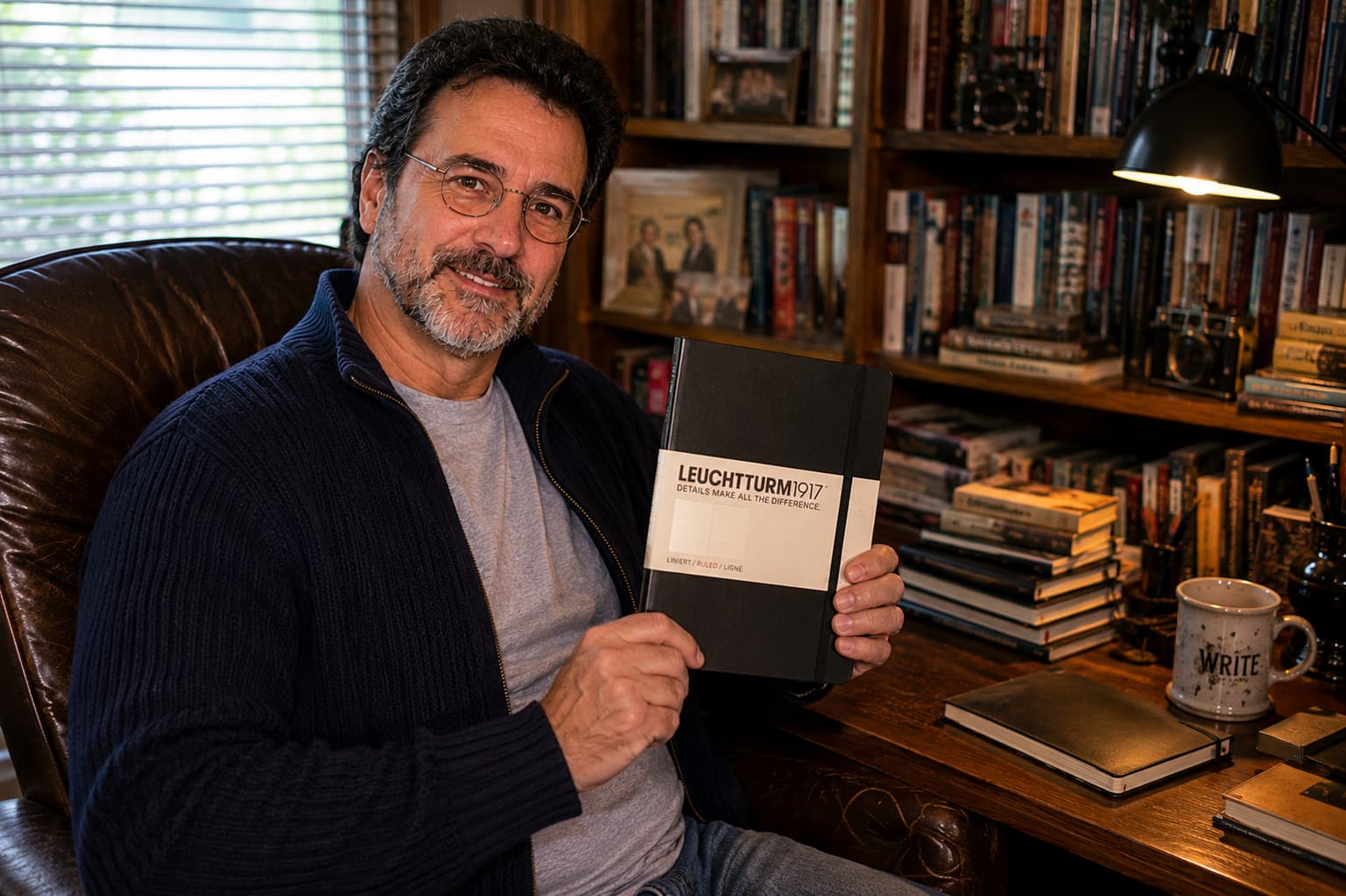
Leuchtturm1917 Hardcover Journal Notebook
My Score: 9.3/10
Why I put it here
Before I found LeStallion, Leuchtturm1917 would probably have been my go-to recommendation. It has earned that place honestly. In the notebook world, it feels like one of the old reliable names — not flashy, not mysterious, just a standard that a lot of writers, planners, and note-takers understand immediately. You pick one up and it makes sense.
The hardcover has that dependable, take-it-with-you sturdiness. It can handle being pushed into a bag, opened on a desk every morning, and used without too much ceremony. The design is simple and clean, and the color range is part of the appeal. It is easy to see how someone starts with one Leuchtturm and accidentally builds a small shelf of them in different shades.
As a writing notebook, the paper is comfortable and predictable. It does not make a dramatic performance out of the page, but it rarely gets in the way either. That matters. A reliable journal should disappear a little once the writing begins. Leuchtturm does that well: it gives you structure, a strong cover, and a familiar writing surface without asking you to think about the notebook too much.
The reason it lands at number two instead of number one is also the reason many people like it. It can feel a little vanilla. I do not mean that as an insult. Vanilla is dependable, useful, and easy to return to. But next to a notebook that gives me a more premium emotional pull, Leuchtturm feels more like the excellent standard than the one that makes me excited to open a fresh page.
That is why I still rank it so highly. If someone asked me for the safest serious notebook recommendation, Leuchtturm1917 would be near the top of the answer. It is the reliable benchmark: sturdy hardcover, clean design, useful colors, good paper, and very few surprises. It may not be the most distinctive notebook here, but it is one of the most trustworthy.
Field notes
- Paper: 80 g/m² slightly chamois-colored paper with good everyday ink compatibility, though not as thick as 100gsm paper.
- Organization: Numbered pages and a blank table of contents make it excellent for indexing projects.
- Markers: Two ribbon page markers are useful when you move between active sections.
- Storage: Gusseted back pocket keeps loose notes and small papers inside the notebook.
- Closure: Elastic closure keeps the book neat in a bag.
- Extras: Includes perforated detachable sheets and labeling/archive stickers on many classic formats.
- Binding: Thread-bound construction opens flat enough for comfortable two-page writing.
“Some writing simply belongs in a ring-bound notebook, and Maruman Mnemosyne is the best version of that feeling I have found.”
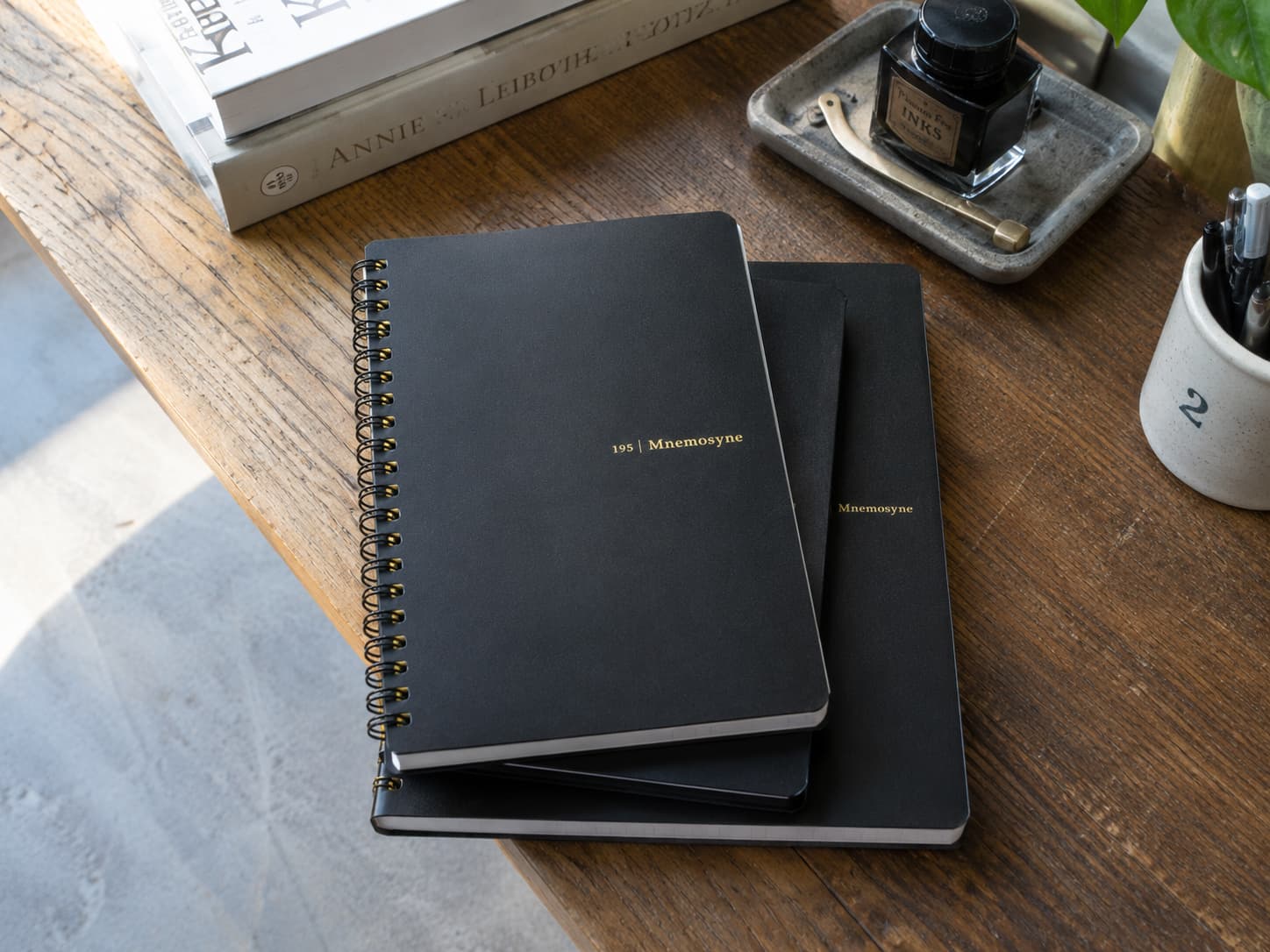
Maruman Mnemosyne Notebook
My Score: 9.1/10
Why I put it here
As a writer, I sometimes get the urge to write in a ring-bound notebook, and I do not think that is a small preference. Ring-bound notebooks create a different working mood. They lie perfectly flat, they fold back easily, and they let you write without fighting the spine. When I am outlining, drafting loose scenes, or making notes that need room to move, that flatness can feel liberating.
Among ring-bound notebooks, Maruman Mnemosyne is the one I trust most. It has that practical, serious feel that makes it more than an office pad. The page count feels generous enough for real work, the paper is excellent for writing, and the whole notebook feels sturdy under the hand. It is not trying to be precious. It is trying to be useful, and it succeeds beautifully.
There is also a reason Mnemosyne has become something of an OG in this part of the notebook world. Writers, students, planners, and working professionals keep coming back to it because the format is genuinely good. A ring-bound notebook gives you an open, no-resistance surface. Some thoughts simply come out better when the page is lying flat and the notebook is not asking you to hold it down.
For writers, I think it is worth having at least one serious ring-bound notebook in the rotation. Not every draft needs the ceremony of a hardcover journal. Some work wants speed, space, and flexibility. For that kind of writing, Mnemosyne is the best version of the format I have used. It makes writing feel direct, unfussy, and physically easy.
The reason it sits at number three is portability. Ring-bound notebooks can be awkward in a bag. The rings can catch, bend, or press into other things, and the notebook itself can take damage more easily than a clean hardcover. So while I love Mnemosyne for desk writing, planning, and pages that need to lie flat, it is not the notebook I would carry everywhere. That small limitation keeps it below LeStallion and Leuchtturm, but only just.
Field notes
- Format: Spiral-bound twin-wire binding lies fully flat and folds back easily for desk writing.
- Paper: Smooth acid-free 80 gsm paper feels practical and clean for notes, outlines, notepads-style planning, and drafting.
- Pages: Common A5 formats offer around 80 sheets, giving enough room for serious project work.
- Perforation: Micro-perforated pages make it easy to remove clean sheets when needed.
- Layout: Ruled/dot-grid options and title/header areas suit organized notes, meetings, and planning.
- Stability: Lays flat, feels sturdy on a desk, and works especially well when you do not want to fight a spine.
- Trade-off: The rings are less bag-friendly and can catch, bend, or press into other items.
“Nuuna reminded me that a notebook can feel like an object of design before it even becomes a place to write.”
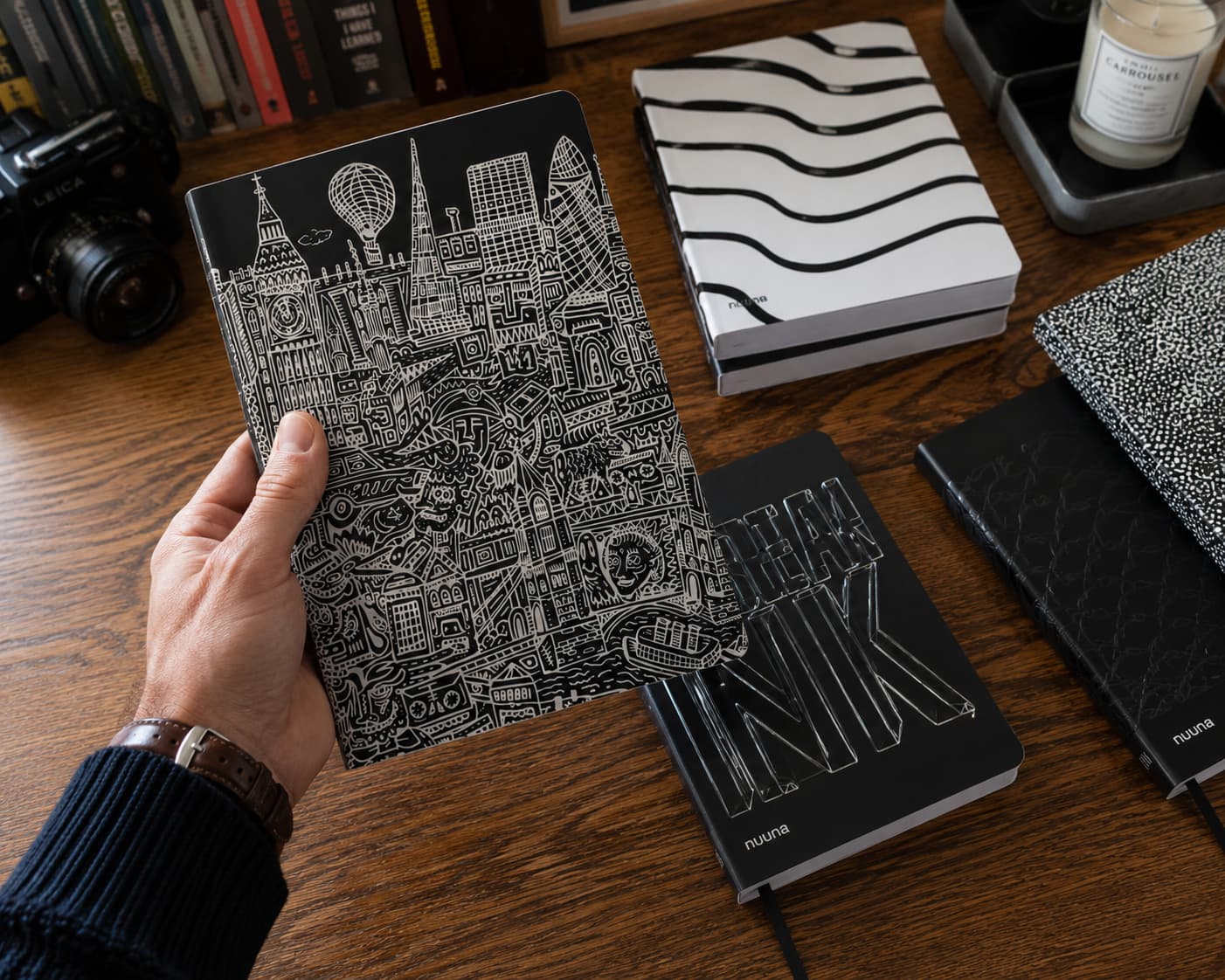
Nuuna Bullet Journal
My Score: 8.9/10
Why I put it here
I discovered Nuuna while shopping for a gift for my little sister. I was looking through what felt like a sea of boring, generic notebooks, and Nuuna was the one that actually stopped me. It looked playful, designed, and different in a way I thought she would love. Then, after buying one for her, I had that slightly embarrassing thought every gift-buyer knows: I wanted one for myself too.
Once I started using a Nuuna notebook, the production quality was what surprised me most. These notebooks feel unusually intentional. The way the cover and pages meet, the minimal margins, and the almost seamless block-like shape give the notebook a very distinctive physical presence. It does not feel like a standard notebook with a nice cover added on top. It feels like the whole object was designed as one piece.
That is why I think Nuuna deserves credit as one of the more innovative names in the notebook design space. There is real craft in the way the notebooks are put together, and you can feel it every time you pull one out. It gives writing a small hit of excitement before the pen even touches the page. That matters more than people admit. A notebook that makes you want to open it has already done part of its job.
The personality, though, is also the limitation. Nuuna has a younger, more playful, more expressive feeling than the notebooks above it. That makes it fun, memorable, and creatively energizing, but it also means I do not always want to use it for serious office work, dry planning, or rough throwaway notes. Some projects feel too plain for a notebook this visually alive.
That is why Nuuna sits at number four. I admire the design deeply, and I think it is one of the most exciting notebooks to own and pull out. But for my own writing life, it feels best for creative work, idea development, and personal projects rather than every kind of daily use.
Field notes
- Paper: Premium 120 g paper gives the notebook a thicker pages feel and a more deliberate writing surface.
- Layout: Dot-grid interiors work well for hybrid writing, planning, sketching, and visual notes.
- Pages: Many Nuuna notebooks include numbered pages, which helps creative projects stay navigable.
- Binding: Thread stitching and sewn binding support a strong lay-flat feel and a seamless block-style notebook shape.
- Design: Graphic covers, soft-touch finishes, unusual materials, and a beautiful cover language make it one of the most visually distinctive options.
- Build: The cover-to-page construction feels intentional and more design-object than generic notebook.
- Personality: Best when you want a notebook that feels playful, modern, and creatively energizing.
“Paperblanks can feel almost too special at first, but once you actually use one, the cover becomes part of the project’s identity.”
Paperblanks Journal
My Score: 8.8/10
Why I put it here
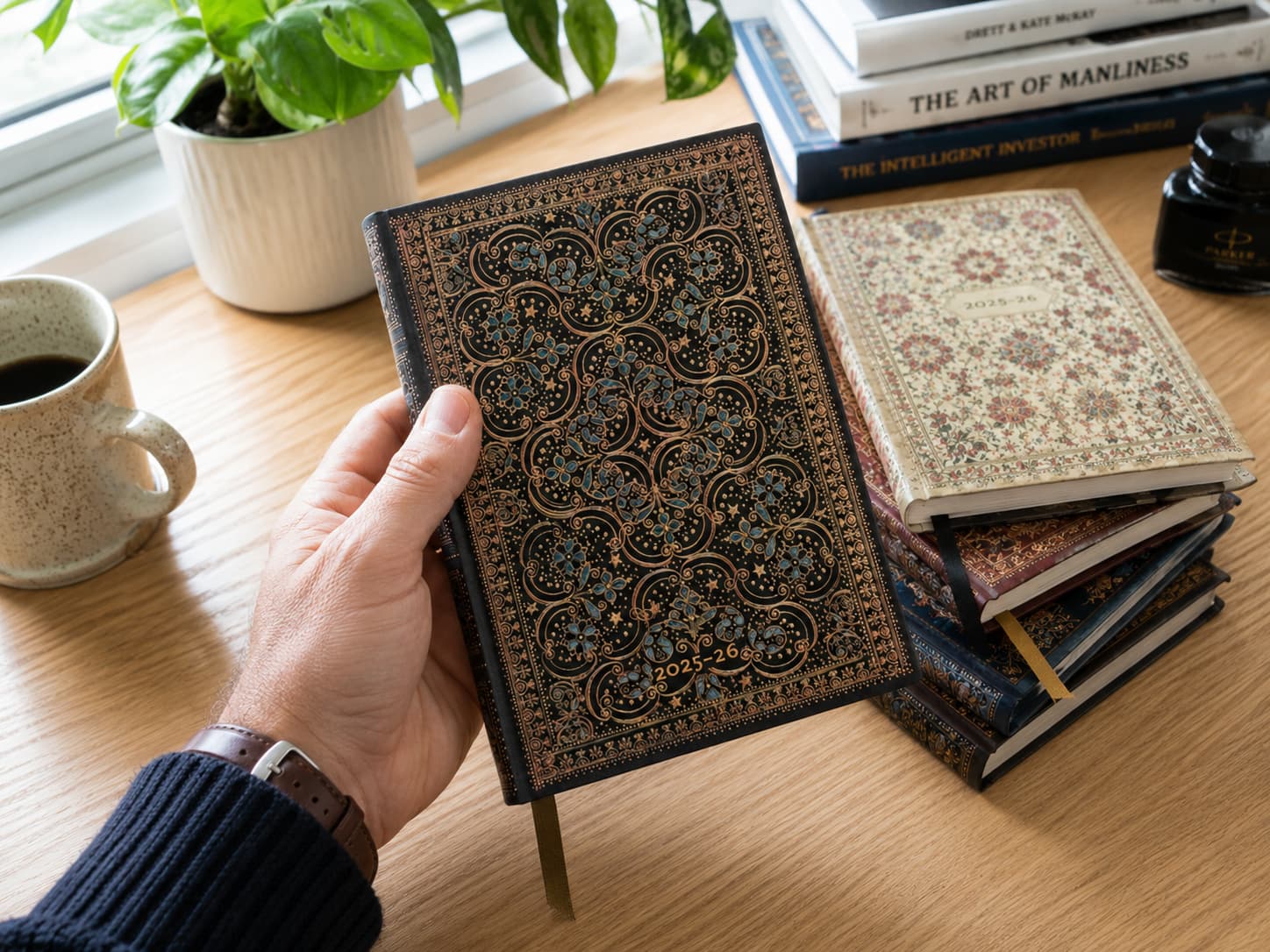
Paperblanks is one of those journal brands you notice in retail stores even when you are not planning to buy anything. The covers have that immediate pull. They look interesting, ornate, sometimes a little mystical, and that can make you hesitate. I remember feeling as if I needed a special reason to buy one, and an even more special reason to write inside it.
Eventually, I did buy a few, and I ran straight into the Paperblanks trap: the design feels so special that you start thinking the writing inside has to be special too. That can be dangerous for a writer. A journal is not useful if it becomes too precious to touch. But once I got over that hesitation and started treating Paperblanks like an everyday notebook, I understood the appeal much more clearly.
The designs really do change the writing mood. When you pull one out, it pops. The patterns, textures, and cover art can spark a creative feeling before you have written a sentence. It is almost like the notebook gives the project a doorway. For novels, stories, long-running ideas, or dedicated creative work, that visual identity can be genuinely motivating.
It is also a solid notebook in practical terms. The hardcover feels sturdy and premium, the paper is decent for regular writing, and many Paperblanks journals give you a satisfying number of pages to work through. It is not only pretty. It has the durability and structure to support a real project from beginning to end.
The reason Paperblanks sits at number five is that the same specialness that makes it inspiring can also make it slightly impractical for rough notes. Sometimes I do not want a dramatic hardcover or an ornate creative design just to jot down messy thoughts. But for dedicated projects, novels, stories, or ideas that deserve their own visual identity, Paperblanks is one of the strongest choices in the journal space.
Field notes
- Cover: Decorative hardcover designs are the main event: ornate, giftable, beautiful cover choices that help define a project.
- Paper: Acid-free writing paper is practical enough for normal journaling and creative drafting.
- Binding: Sturdy hardbound hardcover construction makes it feel like a keepsake as well as a working journal.
- Pages: Often generous page counts, which helps when assigning one notebook to a long project.
- Details: Many editions include useful touches such as ribbon markers, closures, or back pockets depending on format.
- Creative pull: The cover art can give a novel, story, or personal journal its own visual identity.
- Trade-off: Can feel too special at first, which may make rough notes harder to start.
“Moleskine is famous for a reason: thin, light, easy to carry, and still oddly tempting even when the paper reminds me why I ranked it sixth.”
Moleskine Classic Notebook
My Score: 8.6/10

Why I put it here
Moleskine is definitely one of the famous names in the notebook space. Even people who do not obsess over journals tend to recognize it. It has that simple black-notebook silhouette, the elastic band, the rounded corners, and the feeling of being part of a long creative tradition. Some of that is branding, of course, but branding can shape how a notebook feels in the hand, and Moleskine still has a pull.
What Moleskine does well is thin, lightweight portability. It is easy to carry around, easy to slip into a bag, and easy to open when you just need to write. For quick notes, cafe pages, travel thoughts, or everyday capture, that lightness is genuinely useful. A heavier journal can feel more premium, but it is not always the one you want to take with you.
I also like the way a Moleskine opens for writing. The lay-flat feel is one of its strengths, especially when I want a notebook that gets out of the way and lets me write a line, a list, a page, or whatever else is in my head. With the right pen, the experience can feel smooth and fast. There is a gliding quality that can be very pleasant, especially if you like lighter paper under the hand.
The problem is that Moleskine also gets fair criticism. For an 80 gsm style journal, it can feel a little expensive. The paper is thin, and while that helps with portability, it also makes the notebook feel less steady than the picks above it. The cover and pages can take damage more easily, and the paper can show bleed-through and ghosting in a way that spoils the clean-page feeling for me, especially with wetter pens.
That is why Moleskine lands at number six. I still reach for it sometimes, partly because the brand has that familiar pull and partly because it really is one of the best thin, lightweight notebooks when the occasion calls for one. But as a main writing journal, I want more paper confidence, more sturdiness, and less compromise. Moleskine remains useful and iconic, just not my strongest recommendation for serious daily writing.
Field notes
- Portability: The classic Moleskine is thin and lightweight, making it one of the easiest notebooks to carry daily.
- Design: Iconic rounded-corner black-notebook silhouette with a simple, recognizable look.
- Closure: Elastic closure keeps the notebook tidy in a bag.
- Storage: Expandable inner back pocket is useful for loose slips, tickets, and reference notes.
- Bookmark: Ribbon bookmark helps you return to the active writing page quickly.
- Paper: Ivory acid-free thin paper feels smooth, but can be thin compared with heavier journal paper.
- Trade-off: Ghosting and bleed-through can be an issue with wetter ink pens, and the notebook can feel pricey for the paper weight.
“Field Notes is where ideas can stay loose, separate, and useful before they graduate into a more serious notebook.”
Field Notes Memo Books
My Score: 8.4/10
Why I put it here
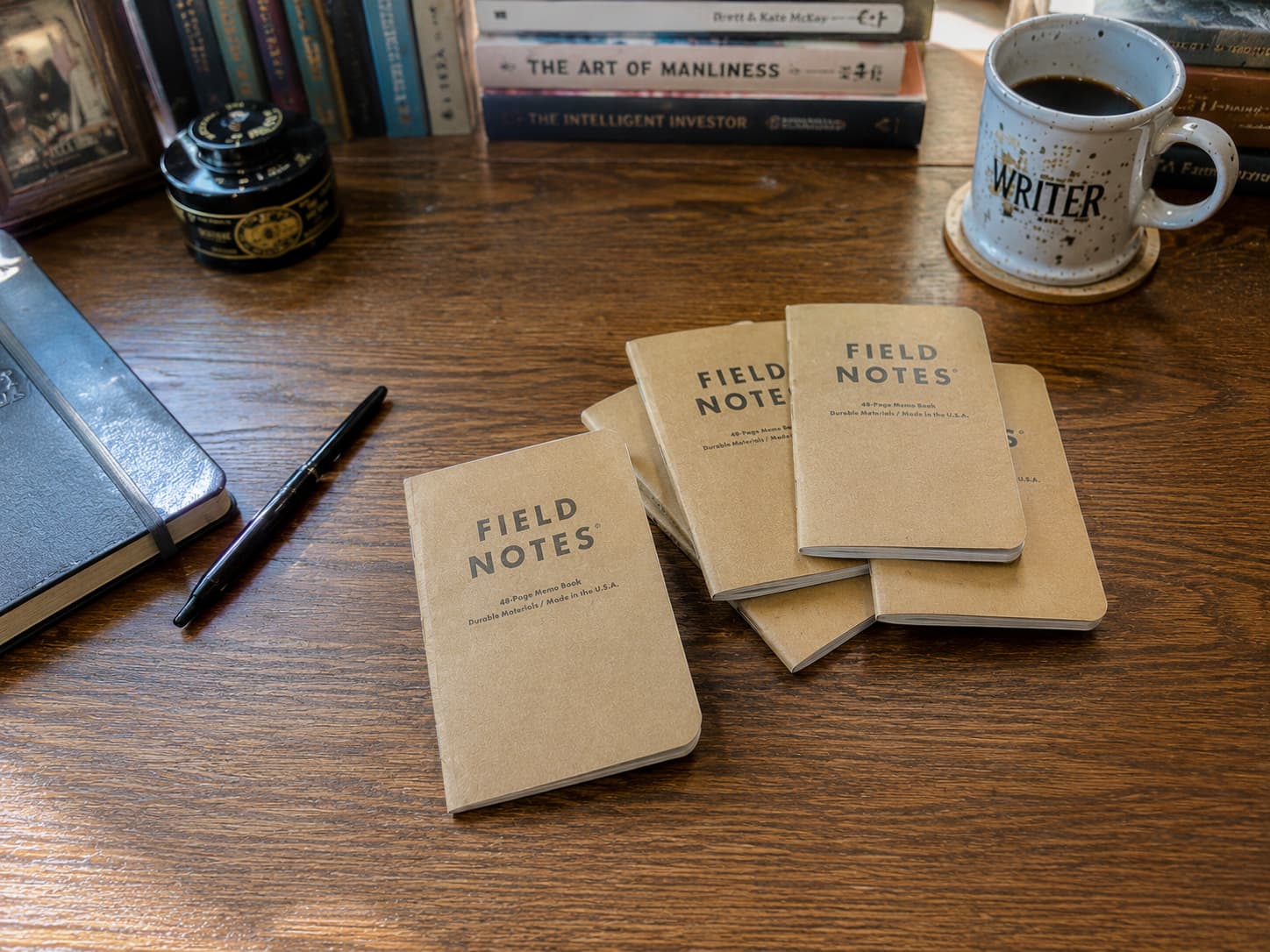
Field Notes is one of those notebooks you do not have to think too much about, and that is exactly why it works. It is small, simple, sturdy enough, and wonderfully unprecious. You can toss one into a pocket, a bag, a glove box, or the side pouch of a suitcase without feeling as if you are risking something important. That makes it useful in a very different way from a premium hardcover journal.
I like Field Notes most when I am on the go or traveling. It is the notebook I do not worry about damaging. If the cover bends, if the corners soften, if it picks up a coffee stain or a little weather, that almost feels like part of the point. You just write in it. There is no ceremony, no hesitation, and no pressure to make the first page beautiful.
That dispensable feeling can be surprisingly freeing for a writer. Field Notes is great for jotting down lots of ideas quickly: a sentence, a title, a rough scene, a list, a question, a project seed. I also like the idea of starting different projects in different little notebooks. One notebook can hold one idea, one trip, one article, or one early-stage project, so the notes stay together instead of getting buried inside a larger journal.
That is where Field Notes becomes more than just a pocket notebook. It can act like a sorting tray for the early mess of writing. I can rough out ideas there, gather fragments, test whether a project has energy, and then move the stronger material into a more serious notebook when it deserves more space. It is not trying to replace the main writing journal. It is trying to catch the sparks before they disappear.
That is why Field Notes belongs on this list. It is reliable, sturdy for its size, easy to carry, and easy to use without overthinking. For serious long-form writing, I still want something larger and more substantial. But for travel, rough notes, project seeds, and idea capture, Field Notes is one of the most useful tools a writer can keep nearby.
Field notes
- Size: Pocket-sized format is easy to keep in a jacket, bag, glove box, or travel pouch.
- Pages: Original Kraft-style memo books are typically 48 pages, which keeps each notebook focused and low-pressure.
- Ruling: Available in graph, ruled, plain, and mixed packs, so you can match the notebook to the idea.
- Binding: Three-staple saddle-stitch binding is simple, rugged, and easy to use on the move.
- Cover: Flexible kraft cover is durable enough for pockets but not so precious that you worry about damage.
- Paper: Acid-free interior pages are practical for pencil, ballpoint, and quick everyday notes.
- Project use: Great for assigning one new notebook to one trip, article, project seed, or cluster of ideas.
Final verdict: the journal I keep coming back to

As an avid writer of novels, screenplays, journals, and everyday notes, I have gone through more notebooks than I can neatly justify. I judge them by the obvious things first: the cover, the paper quality, the design, the durability, and the basic utility of the object. But over time, the more important question becomes much simpler: which notebook do I keep reaching for?
I also considered Levenger desk journals, Rhodia Webnotebook options, Paperage basics, and classic Moleskines before settling on this final order.
That question matters because a good writing journal has to survive ordinary use. I want a notebook I am excited to buy in more colors, excited to see on my desk, and comfortable using for everything from the smallest throwaway note to the most ambitious project idea. I do not want to feel guilty for writing a messy to-do list inside it. I do not want the design to be so precious that it scares me away from the page. The best journal inspires me, but still lets me use it freely.
There are heavy-hitter names in this list. Moleskine, Leuchtturm1917, and Maruman Mnemosyne are not here by accident; they are household names for good reasons. They are reliable, familiar, and useful. Nuuna and Paperblanks are excellent too, especially when I want a notebook with more visual personality or a stronger creative spark. Field Notes has its own place as the little notebook that catches ideas before they disappear.
But after using all of them in different ways, I have realized that LeStallion has become my favorite everyday, all-scenario writing journal in recent years. It gives me enough cover presence to feel special, enough paper confidence to trust longer writing sessions, and enough practical usability that I do not hesitate to use it for ordinary notes. That balance is harder to find than it sounds.
So if I had to start with one notebook from this list, I would choose LeStallion. Not because the other six are weak — they are all part of my real go-to shortlist — but because LeStallion is the one that best matches how I actually write, reuse, rebuy, and entrust projects to a journal. It is the notebook that keeps pulling me back to the page.
FAQ: choosing a writing journal that fits your habits
What paper weight is good for a writing journal?
For everyday writing, I look for paper that feels smooth enough for long sessions but not so slick that the pen skates. Many writers are comfortable around 80–100 gsm for ballpoint, gel, and pencil. If you use wetter fountain pens or heavy markers, thicker paper or fountain-pen-friendly paper is worth prioritizing because it reduces bleed-through and distracting ghosting.
Is a hardcover or softcover journal better for long-form writing?
A hardcover journal gives better desk support, protects pages in a bag, and usually feels more stable during longer writing sessions. A softcover journal is lighter and easier to carry. For manuscript notes, morning pages, or a dedicated writing notebook, I usually prefer hardcover; for travel notes or quick idea capture, softcover can be more practical.
Should I choose lined, dotted, blank, or grid pages?
Lined pages are the simplest choice for essays, diary writing, and long paragraphs. Dotted pages work well if you mix writing with lists, outlines, or light planning. Blank pages suit sketching and visual thinking, while grid pages help with structured notes. If your main goal is prose, lined or subtle dot grid pages are usually the safest bet.
What size journal is best for daily writing?
A5 is the most balanced size for many writers because it has enough room for real paragraphs while still fitting into a bag. Pocket notebooks are excellent for quick ideas but can feel cramped for serious drafting. Larger notebooks give more breathing room, but they are less likely to travel with you every day.
How do I choose a journal for fountain pens or gel pens?
Look for paper that is described as ink-friendly, smooth, and resistant to bleed-through. The key issues are feathering, ghosting, and dry time. If you write with wet pens, avoid very thin paper unless it has a known reputation for handling ink well. A small pen test on the back page is always useful before committing the whole notebook to one pen.
Are spiral notebooks good for journaling?
Spiral notebooks can be excellent if you want pages to lie completely flat or fold back while working at a desk. The trade-off is that spirals can snag in bags and feel less polished than a bound journal. I like spiral formats for notes, outlines, and active project work; for reflective journaling or a keepsake notebook, I usually prefer a bound journal.
How many pages should a writing journal have?
A journal with 150–250 pages usually gives enough space to build momentum without feeling endless. Very short notebooks are great for one project or one season, while thick journals can become intimidating if you like fresh starts. The best page count depends on whether you want one main notebook or separate journals for different writing projects.
Is GSM the same as grams per square meter?
Yes. GSM stands for grams per square meter, and it is a simple way to compare paper weight. Higher GSM usually means thicker pages, though coating and paper quality still matter for fountain pen use.
Is bullet journaling better in a dot grid notebook?
For many writers, yes. Bullet journaling often works best with dot grid pages because they guide lists, habit trackers, calendars, and sketches without making the page feel as rigid as lined paper.
How do I choose the right journal among different notebooks?
Start with your writing style. If you write long entries, choose comfort and paper quality. If you sketch, look for thicker pages. If you carry it daily, a pocket-sized notebook or soft cover may matter more than a large hardcover journal.

About Roger Davis
Roger Davis has been a writer for over 35 years, working across scripts, ghostwriting, documentary storytelling, television, newspaper copy, and author-led projects. His career has moved between polished professional writing and the private, practical habits that keep a writer organized day after day.
His background includes script writing for TV and documentary work, ghostwriting for clients who need a clear voice on the page, copywriting for newspaper-style editorial projects, and long-form author work. That mix gives him a practical view of notebooks: he cares about how a journal feels during real drafting, revision, idea capture, and project planning — not just how it looks in a product photo.
For this guide, Roger approaches each journal as a working writer would: by judging the cover, paper quality, durability, layout, writing comfort, and whether the notebook is inviting enough to keep using after the first few pages.